
Ask Golden Homes

You can renovate a kitchen; you can't move a house to a better street. The price fits, the rooms are the right size, the garden has potential, and you can already picture the furniture. What you haven't seen is the street at 7 a.m. on a school day, or at 11 p.m. on a Friday, or the taxi route that starts up before dawn. The house you can change. The street around it, you can't.
What choosing a neighbourhood comes down to
Choosing a neighbourhood means reading the area your home sits in on several fronts: the character of the streets at different times of day, the quality of nearby schools and amenities, the daily commute, the security picture, and the direction the suburb is heading. It's one of the most important decisions in any purchase, because location can't be renovated. Pick the wrong area and it's the one mistake you can't undo without selling.
Spend time in the area before you make an offer, and speak to people who live there, so your decision rests on what you have seen, not on a listing.
Key takeaways
- Visit the area at different times: a weekday morning, a Friday evening, and a Sunday. Each one reveals something the others hide.
- Proximity to well-performing schools is one of the strongest predictors of long-term property value and should be checked even if you don't have school-age children.
- Drive the commute route at peak hours before you sign. Distance on a map and distance in time are two different numbers.
- SAPS crime statistics by police station precinct are publicly available and should be checked alongside a visit at night.
- A suburb gaining new retail, medical, and school infrastructure is appreciating ground. One losing services is depreciating, regardless of the property's condition.
No area shows its whole self on a single visit. A street can feel calm at midday and change after dark, and the only way to know is to see it at different hours. Choosing the house is the easy half; judging the area around it is the part that decides how you'll live day to day.
One house looked perfect in the late afternoon, walls solid, price tempting. By day the street was full of children, shopkeepers, and neighbours in their gardens. After dark it changed: figures loitering on the corner, music thumping through thin walls, dogs barking half the night. The same address told two different stories, depending on when you stood in it.
The neighbourhood by day and by night

You could fall for a home on a bright Saturday, when the street is calm and neighbours are out in their gardens. Then you move in and learn the rest: music from the pub two doors down until the early hours, people loitering after dark, and sleep that comes in short supply.
A neighbourhood shows different sides at different times. A calm afternoon street can become a busy taxi route by six in the morning. Walls that seem solid by day can carry the thump of music at midnight. You only learn which is which by being there when it happens.
Visit often, and at different times. Go on a weekday evening as families come home from work. Test a Friday night, when the bars and clubs get going. Drive through on a Sunday morning, when calm can mean either peace or isolation. Each visit adds a layer you'd have missed on one quick look, and it's part of buying a home with your eyes open.
Note what you see and hear on each visit, so you can compare areas fairly.
Amenities and lifestyle: how a neighbourhood shapes value
A fine house with nothing around it soon feels like a chore. Schools, hospitals, shops, and transport are what make daily life work, and they hold a suburb's value over time.
When choosing, ask yourself:
- Are schools, clinics, and shops within reach?
- Is the area gaining new services, or are businesses closing?
- What do locals say about safety and convenience?
A suburb gaining new malls, visible policing, and growing schools pulls buyers in, and prices rise with the demand. One where shops close and clinics move away drifts the other way: prices stall and families look elsewhere. Reading those location factors that drive value is what separates a home that grows from one that stagnates.
One buyer chose a lovely house far from any amenities. Their days filled with driving: children late for school, groceries fetched from a distance, hospitals too far when it counted. The buyer who chose the smaller home near schools and shops saw it double in value within a few years, while the larger, isolated house proved hard to sell. Space is worth little when the daily basics are half an hour away.
Traffic and the daily commute
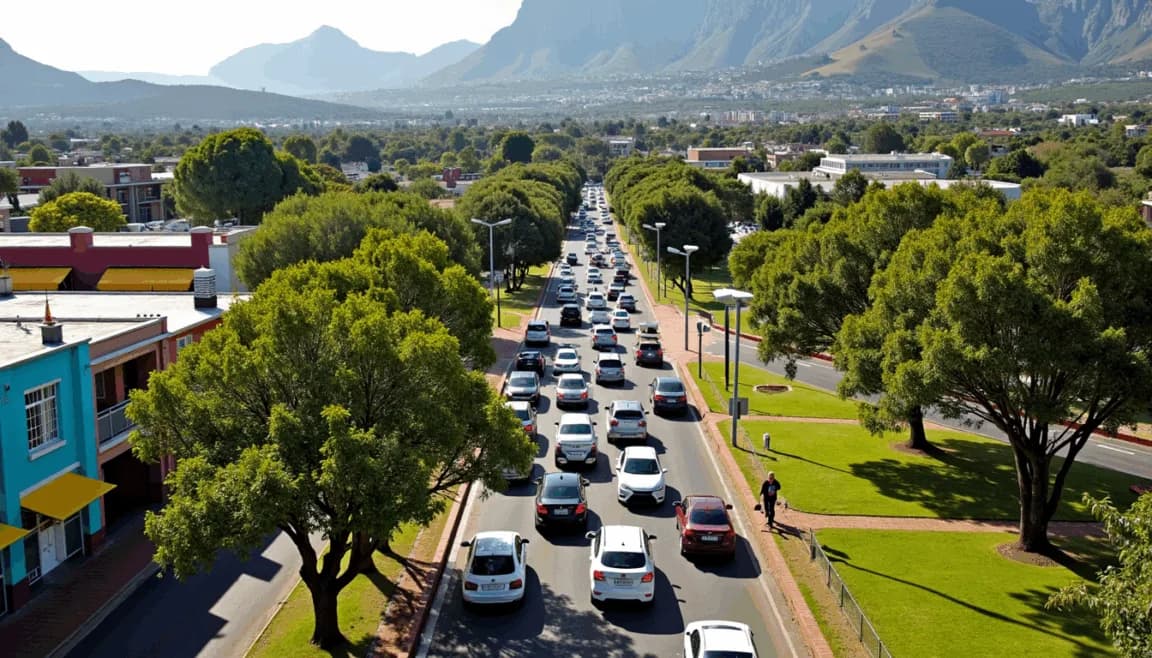
A map makes it look simple. Fifteen kilometres to the city sounds like nothing, until every morning turns into an hour of stop-start crawling. The drive wears you down, and within a year plenty of buyers are selling to escape it. Distance on a map and distance in traffic are two different numbers entirely.
A long commute drains you day after day. It takes your energy before work and your patience on the way home. Petrol costs climb, tempers fray, and children wait at the table for a parent stuck in traffic. A drive that's fine on a Sunday can be a grind every weekday morning.
Before you sign, test the route. Drive to work at peak hour, try the school run, and see how long a Saturday grocery trip takes. Use a traffic app to check the congestion patterns, and ask locals how long their daily trips take in practice, which is one of the questions worth asking before you commit. Good transport links make a suburb easier to live in and easier to sell. Constant congestion does the opposite.
Reading the municipality's plans for the area
A suburb's direction is partly written down in advance. Under the Spatial Planning and Land Use Management Act, a municipal spatial development framework must include a written and spatial representation of a five-year spatial development plan for the municipality, along with a longer-term vision for the next 10 to 20 years. Those frameworks show where the municipality intends to encourage new housing, business nodes and transport routes.
For a buyer, the framework is a map of what may arrive next door. A vacant stand earmarked for higher density, a proposed road extension or a planned business node can change traffic, noise and value on a street within a few years. The buyer can also ask the municipality's planning office, or the agent, whether any rezoning applications have been lodged nearby. Like reading spoor before the animal comes into view, the plans show what is heading toward the street before it arrives.
Ask your agent or conveyancer to check the property's zoning certificate too, so you know what may be built on it and next door. Ask your agent to confirm this before you sign.
Schools: the anchor of value

A modest house near a Johannesburg school once sold for more than a larger home in a distant suburb. Families chased the school zone, not the square metres. That smaller home became an investment that grew steadily, while the larger one struggled to draw buyers.
Schools anchor a location's value. Families pay a premium to be near strong schools, because good education keeps its pull long after fashions and renovations fade. Even without children of your own, you gain, because a suburb with respected schools always keeps its appeal, which makes it one of the safer bets in buying a home.
When you judge the schools, ask:
- Are top-performing schools within a short drive or walking distance?
- What are the matric pass rates and reputations of those schools?
- Are both public and private options available in the location?
Families come back to strong schools year after year, and that steady demand holds a suburb's value across decades.
Confirm the feeder zones with each school directly, because they can change from year to year. Check the wording carefully before you sign anything.
Security and crime
A family moved into a street where every neighbour had dogs, alarms, and high walls. They soon found out why: break-ins were common and prices were sliding. A few kilometres away, another suburb was thriving, with active community policing, neighbours looking out for each other, and values climbing.
Security isn't an afterthought; it moves value as much as walls and roofs do. Look past the fences to the reputation of the area, one of the questions worth asking before you commit. Insurance premiums climb in high-crime suburbs, resale demand drops, and even a fine home loses worth if it sits where people feel unsafe.
When judging security, ask:
- What do official SAPS crime statistics reveal about the location?
- Are visible patrols, cameras, or watch groups active?
- Do neighbours speak of safety, or of break-ins and fear?
Buyers avoid areas with a bad safety record, so a secure suburb is more than comfort; it's protection for your investment.
Ask the local police station and community policing forum about recent trends in the area. Your conveyancer can explain how this applies to you.
What lies under the ground and beside the stream
Some location factors sit below the surface or beside the water, and they do not show on a sunny viewing day. Dolomite is the clearest example in Gauteng. A Council for Geoscience briefing to Parliament noted that around 25% of Gauteng's surface area is underlain by dolomitic land, where sinkholes and subsidence are a recognised hazard, and it listed leaking water-bearing services and poor surface water management among the known triggers. Development on dolomite land is governed by a national standard, SANS 1936.
For a buyer, the question is whether the property sits on dolomite and, if so, what the stability investigation for the area found. The agent, the municipality and the seller's documents are the starting points, and a buyer considering a stand in a known dolomite area can ask whether a geotechnical report exists for the stand or the township. On such a property, a leaking pipe or blocked stormwater drain is more than routine maintenance.
Water above the ground carries its own risk. Section 144 of the National Water Act provides that no person may establish a township unless the layout plan shows, in a form acceptable to the local authority, lines indicating the maximum level likely to be reached by floodwaters on average once in every 100 years. A stand close to a stream or vlei may sit near that line, and the township layout plan shows where it falls.
A home on sound ground and above the floodline keeps its value season after season. A bargain on the wrong side of either line can cost far more than the discount, like a camp pitched in a dry riverbed, comfortable only until the river remembers its course.
Closing Reflection
The walls of a house may promise comfort, but the neighbourhood decides whether that promise holds. Test the roads, check what's nearby, and see the streets by day and by night before you commit.
The buyer who does the scouting ends up somewhere that holds its value, and its calm. The one who skips it inherits whatever the street becomes after dark.
Take your time, and let what you find guide the offer you make. Keep a copy of every document with your records.
You shouldn't have to guess what a street is like after dark. With Golden Homes you won't.
Contact Golden Homes to walk the area with an agent who knows it at every hour, so the neighbourhood you choose still feels right a year in.
Choosing a neighbourhood raises a lot of practical questions. Here are the ones buyers ask us most often.
Frequently asked questions
How do I check crime levels in a neighbourhood before buying?
The South African Police Service publishes quarterly crime statistics by police station precinct on the SAPS website (saps.gov.za). These reports break crime down by category, including residential burglary, vehicle theft, and assault, for each station area. They are a useful starting point, though they capture reported crime only. For a fuller picture, speak to residents directly: knock on a few doors, find the local neighbourhood watch or community group, and ask how active the security response is. Agents working the area can also tell you how much security concerns shape buyer behaviour and pricing. Then drive through at different times, including at night and over a weekend, to judge the activity for yourself. No single source is enough on its own; the honest read comes from putting the official numbers together with what you see and hear on the ground.
SAPS publishes crime statistics by police station each quarter. Raise any concern early, while it is still easy to fix.
Does the quality of nearby schools affect property value?
Yes, consistently. Properties in the catchment areas of well-regarded government schools, or within easy reach of established independent schools, attract a wider pool of buyers and hold value more reliably through downturns. The effect is measurable and well documented across South African urban markets. It exists because families with school-age children put school access near the top of their list when deciding where to live, which keeps demand steady in those pockets. When you buy, check whether the property falls inside the formal enrolment feeder zone of the school you want, not only how close it looks on a map. Being 500 metres outside a feeder zone can make enrolment hard regardless of distance, so confirm the boundary with the school directly before you rely on it.
Ask your agent which schools buyers in the area ask about most. Write any agreed change into the offer before signing. Ask your agent to confirm this before you sign.
What should I look for when visiting a neighbourhood for the first time?
On a first visit, look at the state of the neighbouring properties: uncut grass, broken walls, and neglected exteriors can point to financial stress among owners, or to a high share of rentals with absentee landlords, both of which drag on resale value. Check the road surface and whether potholes get repaired, since that reflects municipal upkeep. Look for signs of an active community: a working park, a neighbourhood watch board, street lights that come on. Then come back at a different time and listen. A school, a church, a pub, or a taxi rank nearby may be invisible on a calm afternoon but shape daily life sharply once you live there. Trust what you observe over two or three visits more than a single good first impression.
Talk to a neighbour or two if you can, and ask what they like and dislike about living there. Check the wording carefully before you sign anything.
How do I know if a neighbourhood is growing in value or declining?
Look at actual transfer data, not asking prices. The Deeds Office records every registered property transfer in South Africa, and several property data platforms including Lightstone and PropStats give access to this data. Compare transfer prices in the suburb over the past three to five years to see whether values are rising, flat, or falling in real terms. Signs of growth on the ground include new retail development, renovations to existing homes, new sectional title schemes being built, and an influx of younger buyers. Declining areas often show the opposite: businesses closing, an increase in to-let boards relative to for-sale boards, and a reduction in owner-occupier investment. Your estate agent should be able to provide recent transfer data for the specific suburb you're considering.
Compare prices over the past three to five years, not only the last few months, to see the real trend. Your conveyancer can explain how this applies to you.
Is it better to buy in an established suburb or a newer development?
Both options carry trade-offs, and the better choice depends on your priorities. Established suburbs offer predictability: you can see the existing community, check the condition of infrastructure, and review years of transfer data to understand how the market has performed. Trees are mature, character is set, and neighbours have typically lived there long enough to give you an honest account of the area. Newer developments offer modern finishes, new infrastructure, and often favourable pricing from a developer anxious to sell units. The risk is that surrounding development is incomplete. Levy structures in new sectional title schemes can also increase sharply once the developer hands over management to the body corporate. Visit any new development multiple times, read the sectional title rules carefully, and ask the developer for projected levy increases before you sign.
In an established suburb, check the condition of the roads, water and electricity services, which the municipality maintains.
Disclaimer: This blog is provided for general information only and does not constitute advice. For advice specific to your circumstances, please contact your closest Golden Homes.