
Ask Golden Homes

The agent has been through every room with a clipboard. You've agreed on a price, and the mandate is on the table waiting for a signature. Then you wonder what happens next. Who takes the photos? Where will buyers see your home, and how will you know if anyone is looking? The lounge is tidy and the dog is at your sister's for the weekend, but the plan for finding a buyer is still mostly in the agent's head...
How does property marketing work when you sell?
Property marketing is everything your agent does to put your home in front of the right buyers and turn their interest into an offer. It starts before the listing goes live, with the asking price and the condition of the home. Then come the photos, the written listing, the property portals, the agency's own website and buyers, social media, and viewings. A good agent plans these steps before you sign and tells you who pays for each one. In most sales the agent's commission covers the standard marketing, but your mandate should say so in writing. You should also hear back from your agent regularly, so you know what is working.
Key takeaways
- The asking price is the first piece of property marketing, because it decides which buyers see your home in their search.
- Good photos and a clear written listing do most of the early work, since buyers decide from a phone screen whether to view.
- Most buyers start on the big property portals, but an agent's own buyer list and website often find the first serious buyer.
- Social media helps most when the ads are aimed at people near your suburb, and buyers can book a viewing in a few taps.
- A show house brings in many people at once, while private viewings bring fewer people who are more likely to buy.
- Before you sign the mandate, ask for the marketing plan, who pays for it and how often you'll get a report.
Price and preparation come first
Property marketing starts with two things you control: the asking price and the state of the home. Buyers on the portals search inside price bands, such as R1 million to R1.5 million. If your price sits a little above a band, many buyers in that band won't see your home at all.
Ask your agent for a comparative market analysis. This is a short report of what similar homes nearby have sold for, not what they were listed at. Use it to agree on a price that fits the right search bands.
Then get the home ready for the camera. Fix the dripping tap, replace dead light bulbs and clear the kitchen counters. Pack away family photos, cut the grass and sweep the stoep. A home that looks cared for in photos tends to get more viewings, and buyers who view it tend to offer closer to the asking price.
None of this needs to cost much. A free weekend of tidying and a few small repairs often do more than any paid advert.
A listing that goes live a week late costs little. A listing that goes live at the wrong price can cost a month of views.
Photos, video and the listing itself
Buyers scroll through dozens of homes on their phones in a few minutes. Your first photo has about the length of a thumb swipe to make them stop.
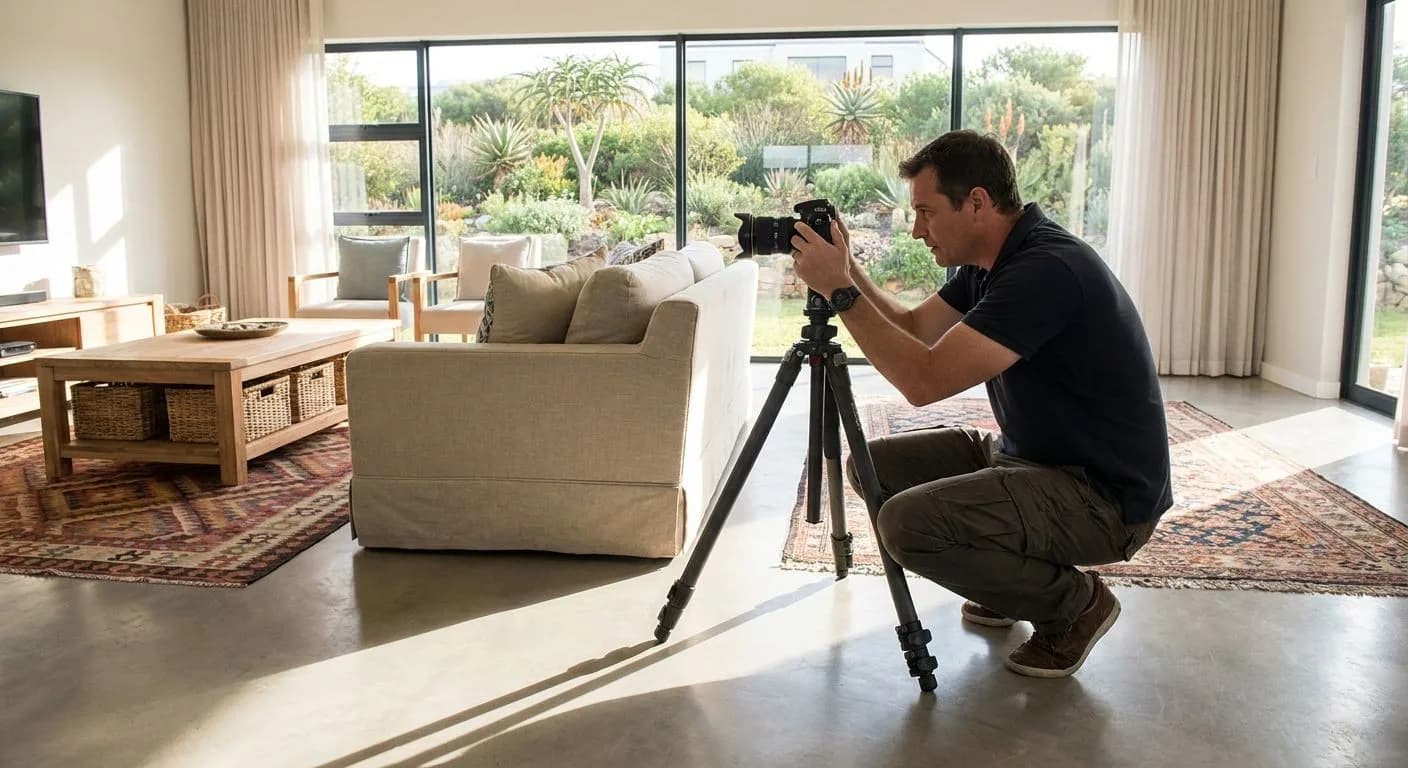
Ask whether your agent uses a professional photographer, and who pays for the shoot. A professional uses a wide lens, good light and straight lines, so rooms look the size they are in real life. Phone photos taken on a cloudy afternoon tend to make a home look smaller and darker than it is.
Many agents now add a short video or a virtual tour. A video walk-through lets buyers see how the rooms connect, which photos can't show. A 3D tour lets buyers from another town walk through the home before they drive out.
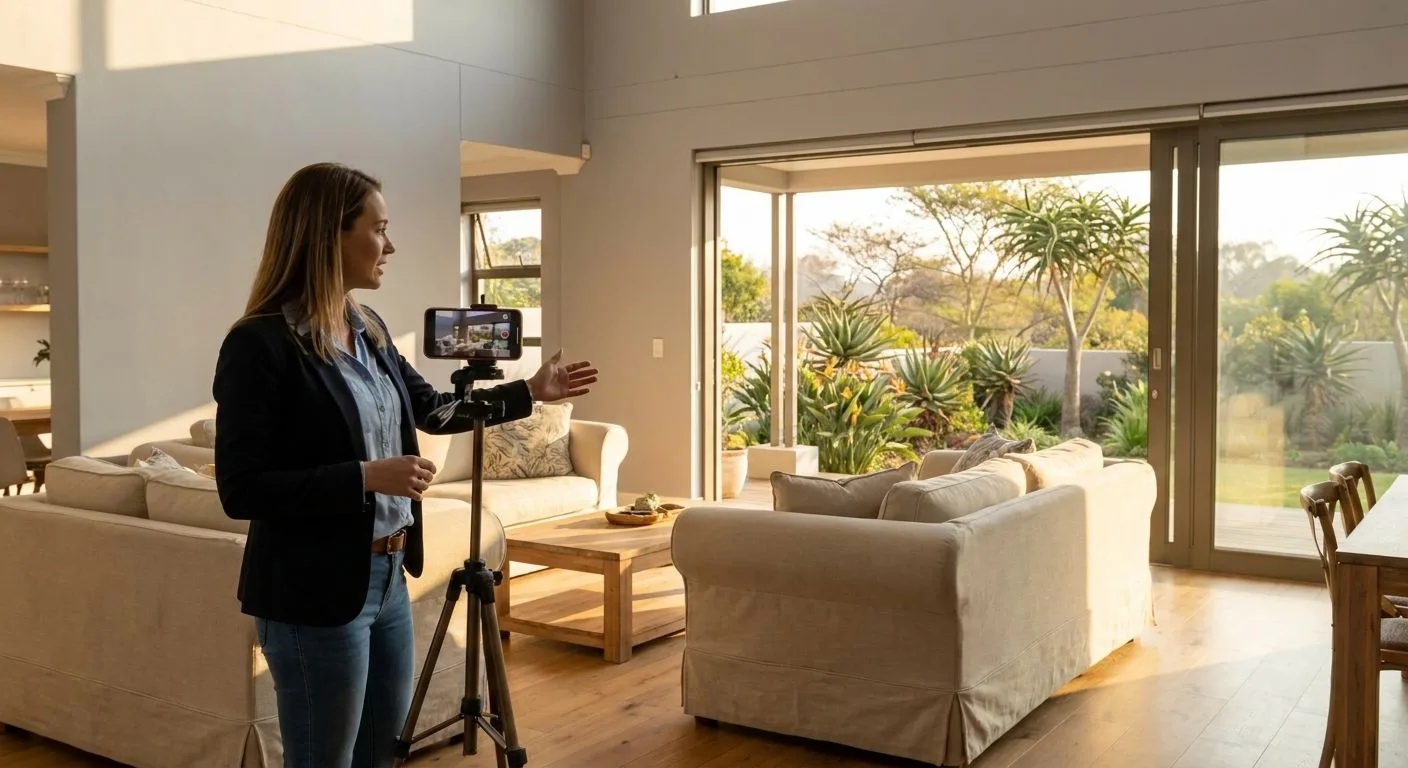
The written listing matters as much as the pictures. A good one names the things buyers search for, such as the number of bedrooms and bathrooms, the stand size, the school nearby and the levies or rates. It leaves out the tired words that every listing uses. Read the listing before it goes live and correct anything that is wrong.

Photos you redo after a month cost money and lose the first wave of buyers, who have already scrolled past.
Where buyers will find your home
Most buyers in South Africa start their search on the big property portals, such as Property24 and Private Property. Your agent loads the listing there, and buyers set up alerts for new homes in their price range and suburb. Ask your agent which portals your home will appear on.
The portals are only part of the picture. A good agent also has a list of buyers who have already enquired about other homes, viewed other properties or asked to be told when something comes up. These buyers are often finance-ready and know the area. Many first offers come from this list before the portal listing has had a week to work.
Your home should also appear on the agency's own website. On ours, buyers can browse the homes for sale by area and price, and send an enquiry straight to the agent.
Ask how the agent contacts buyers on their list, and how often. Under POPIA, the law that protects personal information, buyers must have agreed to hear from the agent. Good agents keep their lists up to date for that reason.
The first two weeks of a listing tend to bring the most interest, so a home that starts on every channel at once uses that time well.
Social media and online adverts
Social media works best for property when it is aimed at the right people. A Facebook or Instagram advert can be shown to people who live near your suburb, or who have been looking at homes there. That is a far better use of money than an advert shown to everyone in the province.
Ask your agent three questions. Will your home be advertised on social media, or only posted to the agency page? Who pays for any paid adverts? And where does the advert send buyers when they tap it?
The last question is the one sellers forget. An advert that sends people to a page where they can see the price, the photos and a button to book a viewing tends to bring real enquiries. An advert that sends them to the agency's home page tends to bring clicks and little else.
A short video of the home does well on social media, and the same video can be used on the portals. Ask for one clip that works in both places, so you aren't paying twice.
Like a fishing line cast where the fish are feeding, a well-placed advert brings in fewer clicks and better buyers.
An advert that runs for a week to the wrong people uses up the budget before the right buyer sees it.
Show houses and private viewings
A show house is an open afternoon, usually on a weekend, when buyers can walk through without booking. It brings many people at once, and buyers who see others viewing often move faster. It also suits homes in busy suburbs where many families are looking.

A show house has costs too. Strangers walk through your home, so pack away jewellery, medicine, keys and laptops before anyone arrives. Ask your agent how they record each visitor's name and number. A good agent follows up with every visitor within a day or two.
Private viewings are booked appointments, often with buyers your agent has already spoken to. They bring fewer people, but those people have usually checked their budget and like the area. Many sellers in estates or complexes use only private viewings, because the security rules make show days hard.
You don't have to choose one for the whole sale. Many agents start with a show house in the first weekend and switch to private viewings after that.
Each weekend without feedback from viewers is a weekend you can't use to fix what buyers didn't like.
What to ask before you sign the mandate
The mandate is the written agreement that lets an agent market and sell your home. A sole mandate gives one agency the right to sell for a set period, such as 90 days. An open mandate lets several agencies try at once. Our guide to mandates and estate agents explains the difference in more detail.
Before you sign either kind, ask for the property marketing plan in writing. It should list the portals, the agency website, any social media adverts, the photographer, and whether there will be show houses. It should also say who pays for each item.
Ask how often you'll hear back, and what the report will show. A useful report gives the number of portal views, enquiries and viewings, plus what buyers said after they visited. If views are high and viewings are low, the photos or price may need another look. If viewings are high and offers are low, buyers may be seeing something in person that the photos hide.
Agree a date, such as four weeks in, to sit down and review the results together.
A plan you agree before signing is one you can measure. A plan you hear about after signing is one you can only hope for.
Closing Reflection
Picture the same table and the same mandate, but this time the marketing plan sits beside it. The photographer is booked for Thursday morning, when the light comes into the lounge. You know which portals will carry the listing, who pays for the adverts and when the first report will arrive. The dog can stay at your sister's one more weekend for the show house. When the clipboard comes out again, it's to tick off what has been done.
You shouldn't have to wonder who is seeing your home, or whether anyone is. With Golden Homes you won't.
Contact Golden Homes before you sign a mandate, and an agent in your area will take you through the marketing plan for your home.
Sellers tend to ask the same few questions once the listing is about to go live. Here are the answers to the ones that come up most.
Frequently asked questions
Who pays for property marketing when I sell my home?
In most sales, the agent's commission covers the standard property marketing. That usually includes the portal listings, the agency website, the written listing and the agent's time at viewings. Some agencies also include professional photos and a set amount of social media advertising. Extra items, such as a drone video, a 3D tour or a longer paid advert, may be charged separately or shared with you. The only way to know is to read the mandate before you sign it. It should say what marketing the agent will do and who pays for each part. If it says nothing, ask the agent to put it in writing. A clear answer before you sign saves an awkward bill later. Under a sole mandate the agent has more reason to spend on marketing, because they are the only agency that can earn the commission for that period.
How long does it take for marketing to bring an offer?
It depends on the price, the suburb and the time of year. A home that is priced well and looks good in photos often gets its first enquiries in the first week. The first few weeks tend to bring the most views, because buyers with saved searches get an alert as soon as the listing goes live. If a home has had many views but few viewings after three or four weeks, the photos or the price usually need another look. If it has had many viewings but no offers, buyers may be finding something in person that worries them, such as damp, road noise or the size of the garden. Your agent's reports should show which of these is happening. Ask your agent what is normal for homes like yours in your area. They can tell you how long similar homes have taken to sell, and help you plan around it.
Should I hold a show house or only allow private viewings?
Both work, and many sellers use both. A show house brings many buyers through in one afternoon. It works well in the first weekend of a listing, when interest is highest, and in suburbs where many families are looking. The downside is that strangers walk through your home, so put away anything valuable and ask your agent to record every visitor. Private viewings bring fewer people, but they are usually buyers the agent has already checked, with a budget that fits. They suit homes in estates and complexes where the rules make show days hard. They also suit sellers who work from home or have small children. Ask your agent which approach has worked for similar homes nearby. A sensible plan is often one show house at the start, followed by private viewings for buyers who missed it or want a second look.
What should my agent's marketing report show?
A useful marketing report tells you what buyers are doing, not only what the agent has done. It should show how many people have viewed the listing on each portal and on the agency website. It should also show how many have enquired, how many have viewed in person and what they said afterwards. Feedback from viewers is the most useful part, because it tells you what to fix. Buyers may like the kitchen but worry about the old roof, or love the garden but find the price high for the area. Ask for a report every week or two, at least in the first month. Then agree a date to sit down and review it together. If the numbers show few views, the photos or price need attention. If they show many views and few viewings, the listing may need better words or a different first photo.
Disclaimer: This blog is provided for general information only and does not constitute advice. For advice specific to your circumstances, please contact your closest Golden Homes.