
Golden Homes Blog
Luxury property in South Africa: what buyers need to know
Ask Golden Homes
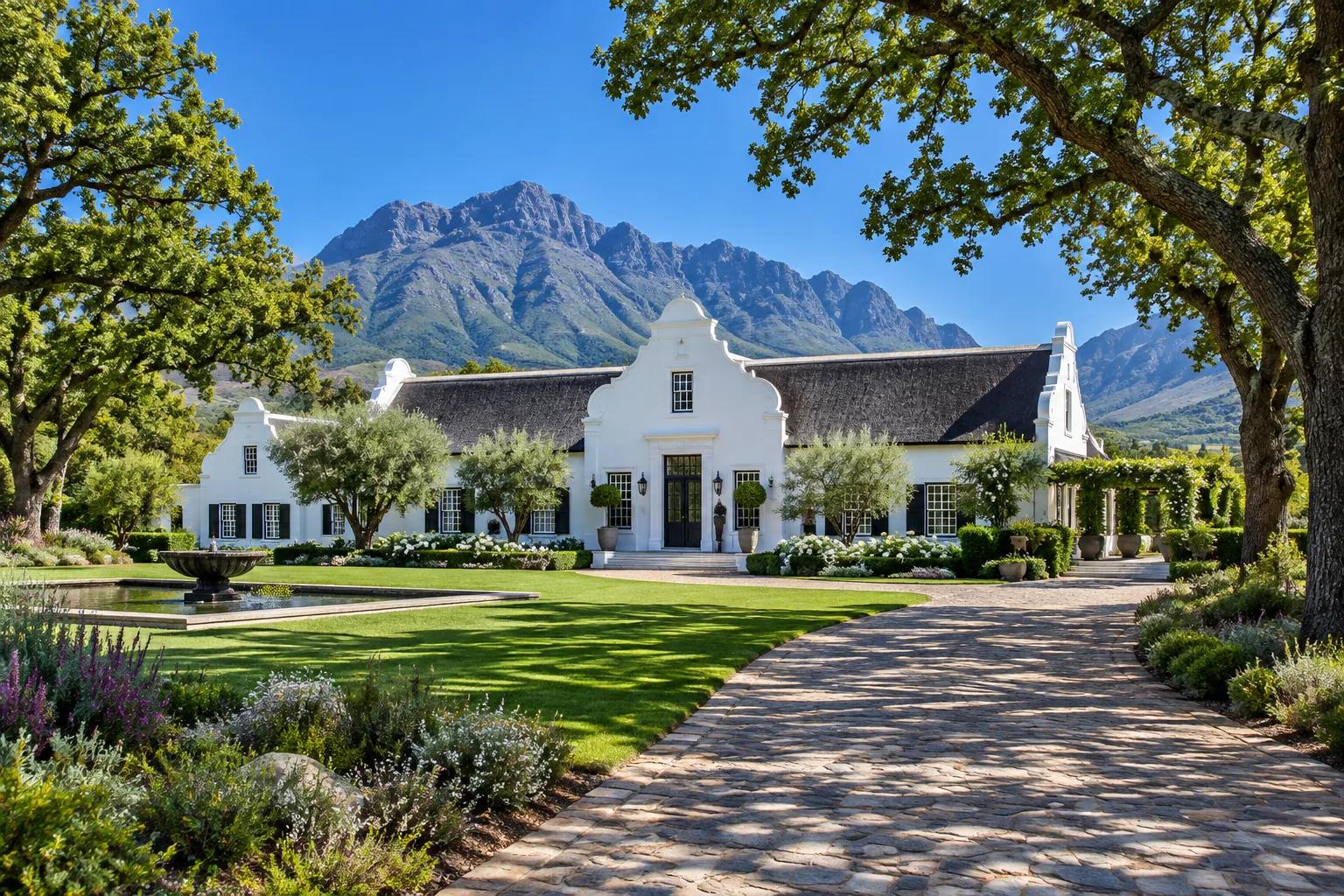
The price is on the listing and it is a number you haven't seen on a property before. The neighbourhood matches the lifestyle you've been building toward. The photographs show a wine cellar, a heated pool, a guest suite with its own entrance. You've bought property once before and you know the broad shape of the process. What you don't know yet is how differently this end of the market operates: who the real buyers are, how pricing works here, what the due diligence looks like, and what the agent's role changes into when the purchase price climbs past the point where most South Africans ever go.
What is luxury property?
Luxury property is residential real estate positioned at the upper end of the market, where the price, the specification, and the location place it beyond the reach of most buyers and outside the patterns of the mainstream market. South Africa has no single official threshold for luxury property, but in practice it starts well above the typical home price: gated estate homes in Sandton, Atlantic Seaboard apartments, and Garden Route golf estate residences regularly trade above R10 million. These properties aren't simply expensive. They carry a different set of buyer expectations, a different marketing approach, and a different pace of sale.
Key Takeaways
- Luxury property in South Africa tends to sell more slowly than mainstream property, and pricing it correctly from the start counts more, not less.
- Your due diligence at this price point should cover more ground than a standard home purchase: title deed history, estate rules, special levies, and zoning status all warrant careful review.
- South Africa is Africa's largest luxury market by value, so high-end spending runs deep, but buyers at the top end are also more selective and better informed than in the mainstream.
- The property market at the top end is far less information-asymmetrical than it was a generation ago; buyers arrive with comparable sales data and pricing benchmarks already in hand.
- Transfer duty, capital gains tax, and estate levies at this price point can add material costs to the purchase: budget for all of them before you make an offer.
- An agent who knows the upper-end market in your chosen area will give you a different quality of insight than a generalist; the difference shows up in negotiation and in due diligence.
Where luxury property sits in the South African market
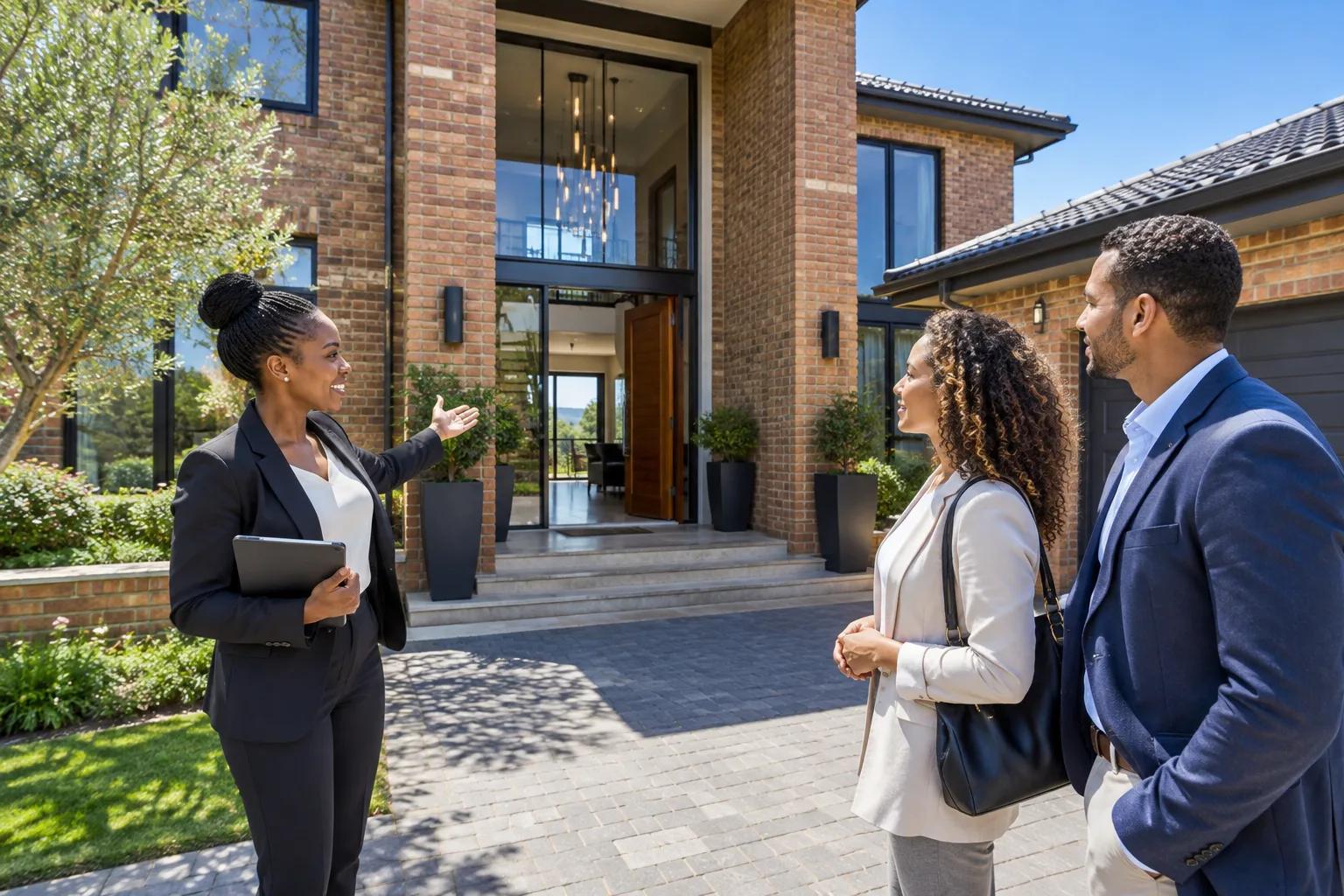
South Africa is home to Africa's largest luxury market, valued at US$2.2 billion, which represents 37% of the continent's total luxury market. That figure covers luxury goods and services broadly, and it shows the depth of high-end spending in the country. The country's top-end residential market is concentrated in a handful of nodes: the Atlantic Seaboard and Southern Suburbs of Cape Town, Sandton and Fourways in Gauteng, Umhlanga and the Upper Highway in KwaZulu-Natal, and the Garden Route between Mossel Bay and Plettenberg Bay.
Each node has its own character and its own price ceiling. Atlantic Seaboard apartments reach figures that would buy a substantial farm elsewhere in the country. The Garden Route, built partly around a string of celebrated golf estates, draws a different kind of buyer altogether. Understanding which node you are entering shapes everything that follows, from the offer you put forward to the holding costs you carry after transfer.
Each of these markets has its own pace, its own buyer pool and its own pricing logic. A price that is normal on the Atlantic Seaboard may look high in another area. Compare like with like before you decide what a property is worth.
The Garden Route and golf estate market
The Garden Route has become one of South Africa's most recognised addresses for luxury residential property, and the golf estate model is central to that reputation. Estates including Fancourt in George, Pezula in Knysna, Pinnacle Point in Mossel Bay, Simola in Knysna, and Oubaai, Kingswood, and Goose Valley have drawn buyers who combine a lifestyle requirement with a property investment. These aren't simply houses inside gates. Each estate carries a body of rules, an architectural code, estate levies, and often a waiting period for full membership of the sporting facilities.
Buying into a golf estate at this level means understanding those rules before you make an offer. The architectural review process may affect what you can build or renovate. The estate's levy structure affects your monthly holding costs. The resale value of your property links in part to the reputation and maintenance of the estate. None of this is a reason to avoid this market. It is a reason to enter it with the full picture.
Ask the estate for its rules, levy history and recent resale figures before you sign an offer.
Information and pricing at the top end
The top end of the property market has changed in one important way over the past decade. Information is no longer held primarily by agents. A buyer sitting at a desk in Johannesburg can access comparable sales, aerial photography, flood plain data, and sectional title levy histories for a Cape Town estate before booking a viewing. The SAPOA proptech research on the South African property market looks at how technology is changing the way property information is shared, and buyers now arrive far better informed.
For luxury property sellers, this means overpricing is exposed quickly. For buyers, it means you can and should arrive at any viewing with comparable sales figures already prepared. A property priced 20% above its realistic market value used to sit for months before an agent had the difficult conversation with the seller. Now, buyers see the price, compare it against recent sales in the same estate, and don't schedule the viewing at all. Correct pricing isn't a selling tactic at this level. It is the entry requirement for finding a serious buyer. The property market consistently rewards sellers who accept this early.
The lifestyle estate model and what it means for due diligence
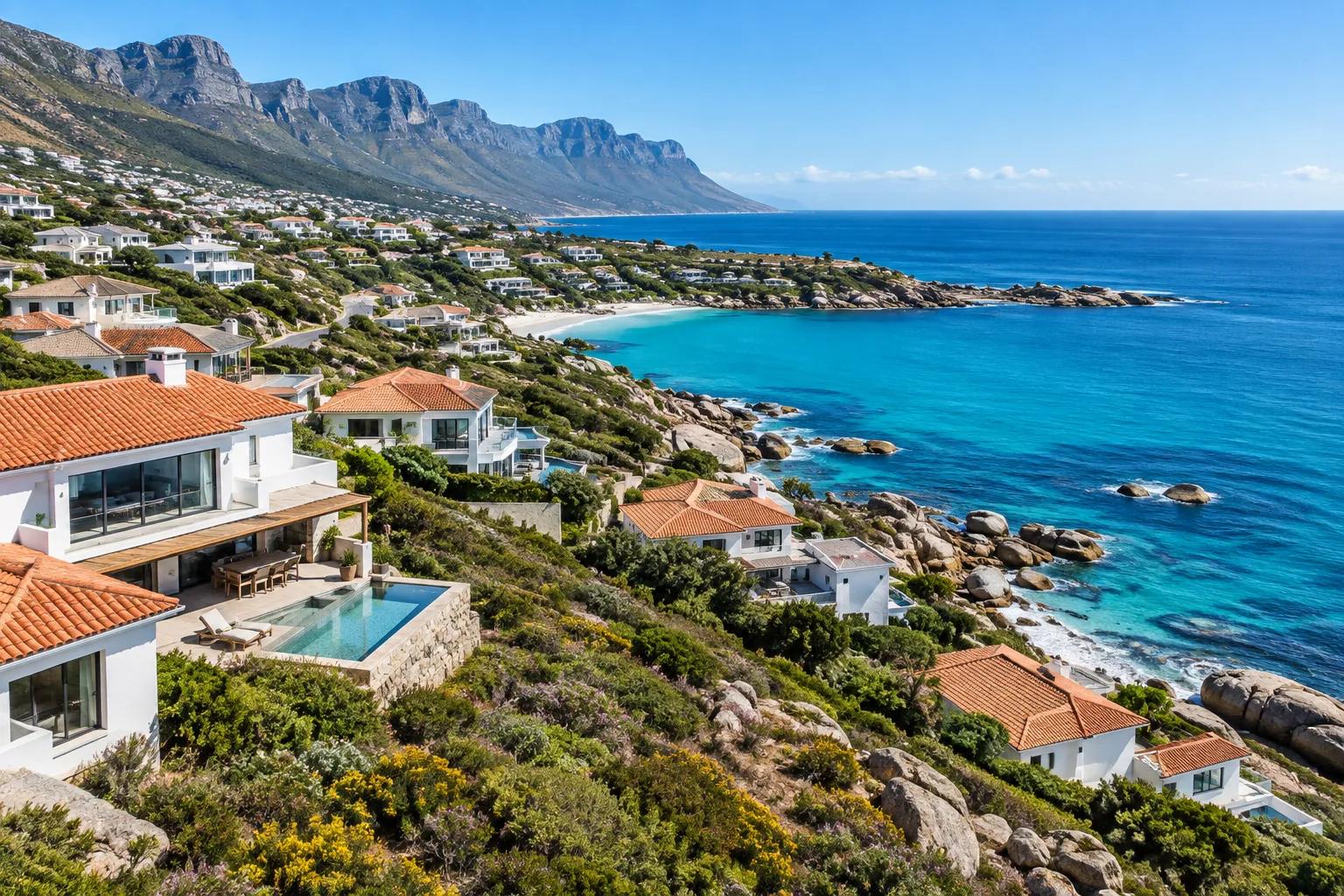
Lifestyle estates are a specific category within luxury property, and they carry obligations a freehold purchase does not. Waterfall Estate in Gauteng, on the banks of the Jukskei River, is one example: a highly secure lifestyle residential estate with walking and jogging trails, green living as a design principle, and a governance structure going beyond standard body corporate arrangements. Buying into an estate of this kind means the Homeowners' Association rules are legally binding. Your architect must work within the estate's design code. Your contractor may need estate approval before work begins.
The due diligence on a luxury estate property covers more ground than on a standard freehold home. Request the HOA financial statements, not only the levy schedule. Check whether there are any special levies planned or already raised. Confirm the estate's maintenance reserve fund is adequately funded, because a shortfall there often means a special levy lands on the next buyer. Confirm the property's title deed is clean and no real rights or servitudes affect what you intend to do with it. This is where a good conveyancer earns the fee, and where your cost of not checking shows up later in the transfer or on the levy account.
Transfer duty and tax at the upper end
Transfer duty in South Africa is calculated on a sliding scale. At the price points where luxury property trades, the duty figure is material. A buyer purchasing a property at R15 million pays transfer duty on the full value above the threshold at which duty applies. On the current SARS table that figure is R1 461 156, and it doesn't appear on the purchase price, the marketing summary, or the estate agent's comparison sheet. It appears on the conveyancer's account, weeks after the excitement of signing.
Capital gains tax on a subsequent sale is a separate consideration. The primary residence exclusion under South African tax law provides some relief, but properties trading at the upper end often generate gains exceeding the exclusion. If you are buying as an investor rather than as an owner-occupier, or through a company or trust structure, the tax treatment differs again. The transfer duty tables SARS publishes are updated periodically, and your conveyancer should confirm the current figures before the offer is drafted. Budget for these costs before you negotiate the purchase price, not after. Getting this wrong at R15 million doesn't mean a rounding error: it means a six-figure shortfall in your settlement funds.
Transfer costs at a glance: what to budget for on a luxury purchase
| Cost | Who pays | Notes |
|---|---|---|
| Transfer duty | Buyer | Calculated on sliding scale above threshold |
| Conveyancer's fee | Buyer | Guideline tariff, increases with purchase price |
| Bond registration cost | Buyer | Payable if bond is registered |
| Agent commission | Seller | Percentage of purchase price, negotiable |
| HOA transfer fee | Buyer or seller | Estate-specific, check the rules |
Marketing luxury property and what sellers should expect

Luxury property doesn't sell through the same channels or at the same pace as a three-bedroom family home in the suburbs. The pool of qualified buyers is smaller. The decision cycle is longer. A buyer able to spend R20 million on a residential property typically owns property already, has advisers involved in the transaction, and moves at a pace reflecting the size of the decision rather than the urgency of the search. Marketing for this segment requires professional photography going beyond a smartphone walkthrough, copy describing the property with specificity rather than superlatives, and distribution to networks where buyers at this level are looking.
Luxury buyers in particular arrive at viewings having already made preliminary judgements about a property's value. A brochure with vague descriptions and photographs taken on an overcast Tuesday afternoon damages the perceived value before a buyer sets foot inside. The investment in professional presentation isn't optional within the luxury market. It is a baseline, and sellers who treat it as one tend to sell faster and closer to asking price than those who don't.
Closing Reflection
You came to this market with a number in mind and a lifestyle you've been building toward. The price on the listing is real. So are the costs and obligations sitting behind it. The property market at the upper end rewards preparation more than it rewards enthusiasm. What separates a good outcome from a difficult one at this level is usually not the property. It is the due diligence done before the offer, the professionals chosen to handle the transfer, and the honest conversation about total cost that should happen before the pen touches the page.
You shouldn't have to navigate the upper end of the property market without someone who knows the ground. With Golden Homes you won't.
Contact Golden Homes to speak with an agent experienced in luxury property in your area before you sign anything.
Every top-end purchase raises specific questions: these are the ones that come up most often.
Frequently Asked Questions
How important is professional photography when marketing a luxury property?
Luxury property photography is a specialist part of marketing at this price point, because buyers view properties online before deciding whether to schedule a viewing in person. It goes well beyond pointing a camera at a well-lit room. The photographs must capture spatial relationships accurately, show finishes and materials at a quality reflecting their cost, and position the property correctly against comparable listings.
The difference shows up not in the photographs but in how quickly a qualified buyer books a viewing. A property photographed well attracts attention from buyers genuinely in the market. A property photographed poorly filters those buyers out before the agent ever speaks to them.
Ask to see recent listings the agent has marketed at a similar price level. The quality of those photographs, the order of the images and the first image chosen show you how the agent approaches presentation. If the examples look rushed, your listing will likely look the same.
Do luxury homes need aerial photography and virtual tours?
At the upper end of the South African market, yes. Aerial photography is standard for estate properties and larger stands, and video walkthroughs and Matterport-style virtual tours have become expected by buyers at this level.
The reason is how luxury buyers search. They view properties online before deciding whether to schedule a viewing in person, so the online presentation has to do the early work of showing the home. Aerial images show the stand and its position, while a walkthrough or virtual tour shows how the rooms connect, which still photographs alone can't convey as well.
A listing without these formats sits next to comparable listings carrying them, and buyers comparing the two online notice the gap before they decide which homes to visit.
Ask the agent whether these formats are included in the commission or charged separately, and agree on it in writing before the mandate is signed. That way there are no surprises when the listing goes live.
How do I choose an estate agent to market a luxury property?
Ask to see the photographic and video work the agent produced for recent listings in a similar price range. The production quality of those materials tells you quickly whether the agent treats luxury marketing as a distinct skill or as a higher-priced version of the standard approach.
Look for photography capturing spatial relationships accurately and showing finishes and materials at a quality reflecting their cost, aerial work on estate properties and larger stands, and video walkthroughs or virtual tours. Then ask how quickly qualified buyers booked viewings on those listings, because that is where good marketing proves itself: a well-presented property attracts buyers genuinely in the market, while a poorly presented one filters them out before the agent ever speaks to them.
Ask, too, how the agent screens buyers before a viewing and how often you will receive feedback. An agent who can answer both questions plainly has a process, and a process is what protects your price.
How much transfer duty will I pay on a luxury property?
Transfer duty in South Africa is charged on a sliding scale, and at luxury price points it runs into hundreds of thousands of rand. On the SARS table in use since 1 April 2025, a property worth R5 million attracts R327 356 in transfer duty, a R10 million property attracts R877 356, and a R15 million property attracts R1 461 156. Above R13 310 000, the duty is R1 241 456 plus 13% of the value above that figure.
The buyer pays transfer duty before the transfer is registered, and banks usually expect it in cash rather than as part of the bond, so it has to come from your own funds. If you buy a new home from a VAT-registered developer, VAT is included in the price instead and no transfer duty is payable.
Your conveyancer will confirm the exact figure, together with their fee and the Deeds Office costs, before you sign. Ask for a full cost estimate early, so the money is ready when the conveyancer asks for it.
Disclaimer: Everything on this blog is written to inform and educate. It is for information only. Nothing here is professional legal, financial, or technical advice. If you are making a significant business decision, speak to a qualified professional first. Golden Homes works hard to keep this content accurate and current, but is not liable for decisions made based on what you read here.